
How I Automated Customer Discovery Outreach
Finding the right people to interview is the bottleneck of customer discovery. Here's how I automated prospect research and outreach.
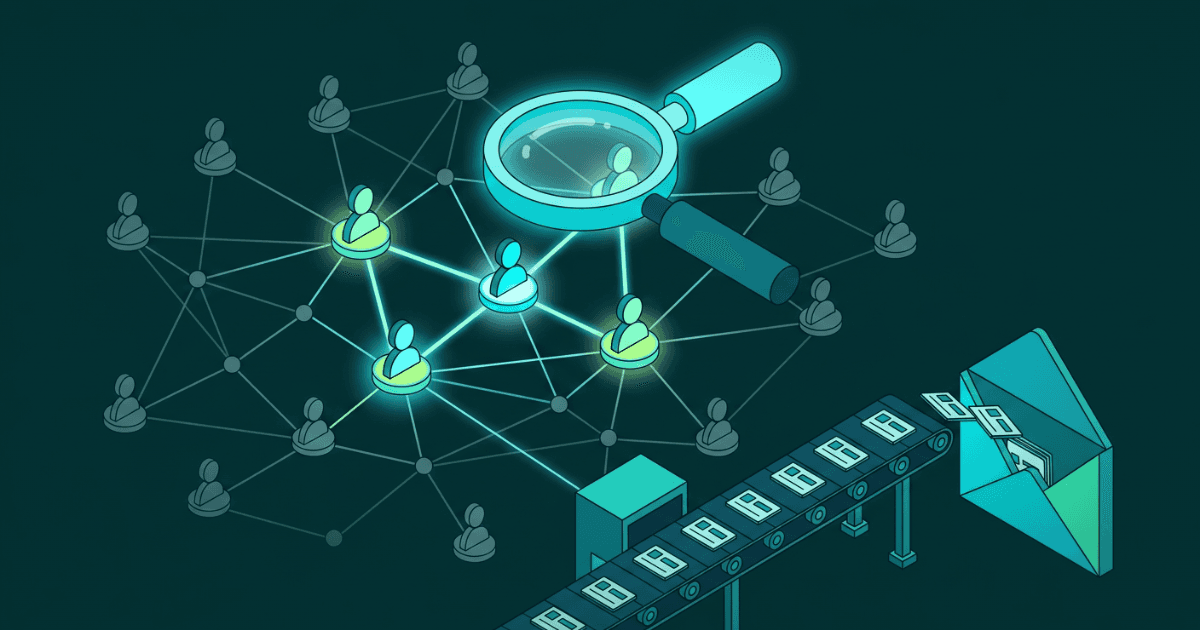
TL;DR: The hardest part of customer discovery isn't the interview. It's finding who to interview. While running discovery for a Fortune 500 innovation project, I realized I was burning most of my time on manual prospect research and one-by-one LinkedIn outreach. So I built TMD: a tool that searches third-party data sources, enriches prospect profiles, personalizes connection messages, and sends them automatically. A full day of grunt work became a 20-minute setup.
If you've ever built a new venture inside a large organization, you know the drill. Before you can validate anything, before you can test a value proposition, run a landing page experiment, or build a prototype, you need to talk to potential customers.
Not just any people. The right people. People who match a specific title, at a specific kind of company, in a specific industry, who might actually have the problem you think exists.
This is the unglamorous core of venture building: customer discovery. And the single most important activity within it is identifying those potential customers, reaching out to them, and getting them on a call to hear about their pains.
In theory, it's straightforward. In practice, it's the bottleneck that kills momentum.
The manual grind
Here's what customer discovery outreach looked like for me before TMD:
-
Define the target profile. CTO at a mid-market SaaS company. Or Head of Operations at a logistics firm with 500+ employees. Or VP of Innovation at a consumer goods manufacturer. You get the idea.
-
Search LinkedIn manually. Type in filters. Scroll through results. Open profiles one by one. Assess fit. Copy their name and details into a spreadsheet.
-
Write a personalized connection message. Not a template blast, but something that references their role, their company, why you're reaching out. Because generic outreach gets ignored.
-
Send the connection request. Click connect. Paste the message. Submit. Move to the next one.
-
Repeat 20-30 times. Then wait. Follow up. Track who accepted, who didn't, who responded.
-
Update your tracking sheet. Log the status. Note the date. Pray you didn't lose track of someone important.
On a good day, I could research and reach out to maybe 25 prospects. That's an entire day, easily six or seven hours, for 25 connection requests. And most of them wouldn't respond for days, if at all.
Now multiply that across three or four discovery tracks running in parallel, which is typical for a corporate venture building engagement. You're looking at entire weeks consumed by the logistics of discovery rather than the discovery itself.
The Fortune 500 moment
The breaking point came during an engagement with a Fortune 500 client. We were running discovery across multiple customer segments simultaneously: different industries, different personas, different geographies. The team needed to reach hundreds of potential interviewees in a matter of weeks, not months.
I looked at the manual process and did the math. At 25 prospects per day, with a 15-20% response rate, we'd need to reach out to roughly 500 people to book 75-100 discovery calls. At the manual pace, that's 20 full working days just on outreach. A full month of a senior person's time, doing nothing but copying names into spreadsheets and clicking "Connect."
There had to be a better way.
What I built
TMD started as an internal tool. A way to shortcut the most painful parts of discovery outreach. The idea was simple: automate everything except the actual conversation.
Search and enrichment
The first piece was prospect discovery. Instead of manually scrolling through LinkedIn, TMD connects to third-party data sources that index professional profiles. You define your target: job title, seniority level, company size, industry, location. TMD searches across these sources and returns enriched profiles (name, title, company, headline, location), already structured and deduplicated.
Advanced filters let you get specific: exclude certain companies you've already spoken to, filter by years of experience, target people who recently changed roles (often more open to conversations), or narrow by department and function. You can pull 100 enriched profiles in the time it used to take to manually research 10.
Campaign-based outreach
The second piece was personalized outreach at scale. TMD uses a campaign model: you create a campaign with a message template that includes dynamic variables like first name, company, title, and industry. Something like:
"Hi firstName, I'm working on a project exploring how industry companies handle a specific challenge. Given your role as title at company, I'd love to hear your perspective. Would you be open to a 20-minute call?"
Each variable gets swapped in automatically from the prospect's profile data.
You add prospects to a campaign, and TMD generates a personalized message for each one. Not a mass blast. Each message reads like you wrote it individually, because the template pulls from real profile data.
Automated sending
The third piece was execution. A background worker picks up queued connection requests and sends them with human-like pacing: random delays, natural scroll patterns, respectful daily limits. It runs on a separate server, processing the queue steadily throughout the day while you focus on the work that actually matters. Preparing for and conducting the discovery interviews.
Tracking and sync
Everything syncs back to your existing workflow. TMD integrates with Airtable, so prospects flow into your tracking base automatically. When a connection request is sent, the status updates across both systems. No more manual spreadsheet management. No more "wait, did I already reach out to this person?"
What changed
The math shifted dramatically.
What used to take a full day (researching 25 prospects, writing personalized messages, sending them one by one) now takes about 20 minutes. Search for prospects, review the results, add them to a campaign, and let TMD handle the rest.
During that Fortune 500 engagement, we went from "it'll take a month to reach enough people" to "we've got outreach running across all segments by end of week." The team could focus on interview prep, synthesis, and pattern recognition. The high-value work. TMD handled the prospecting pipeline in the background.
But the more surprising shift was qualitative. When outreach is no longer a bottleneck, you can afford to be more targeted. You don't settle for "close enough" personas because you're exhausted from manual searching. You can run narrower, more specific searches and reach exactly the people whose perspective you need. The quality of discovery conversations went up because the quality of targeting went up.
The tool today
TMD is currently an internal tool. We use it on client engagements where high-volume customer discovery is part of the scope. It's not a product (yet), but it's become indispensable in how I run The First Crossing sprints and broader venture building programs.
The stack is lean: a Next.js dashboard on Vercel, an Airtable backend for flexibility, and a small worker service for the automation layer. It's the kind of tool that doesn't need to be complex. It just needs to reliably remove the friction from a process you do over and over.
The lesson
Every venture builder I know has some version of this problem: a repetitive, time-consuming activity that eats into the work that actually creates insight and moves ideas forward. For me, it was prospect research and outreach. For someone else, it might be competitor analysis, or user testing recruitment, or partnership mapping.
The instinct is often to just push through it. To accept the manual work as "part of the job." But when I stepped back and measured where the time was actually going, the answer was obvious. I wasn't spending my days on customer discovery. I was spending them on customer finding. The discovery, the actual learning, was squeezed into whatever time remained.
Building TMD gave that time back. And like I wrote about with Maximiser, the lesson is the same: if a process hurts every time you do it, that's not discipline. It's a signal to build something better.
Want to discuss this further?
I'm always happy to chat about building products and validation.
Get in touch